How to Start and Finish Your Open Water Race
Working on these small parts of your race can have a big impact on where you place
Photography by KATHLEEN CALLICOTT
Demonstrated by CHARLOTTE BRYNN, TONYA HAMMOND, STELLA RICHARDS and TOM RICHARDS
Open water starts and finishes make up a small portion of open water races but occupy a large part of each competitor’s mind and cause anxiety. They can also have a major impact on your place. A poor start can get you caught behind slower swimmers you have to spend energy getting around, and a slow finish can let somebody shoot by you.
With preparation, you can ensure that your starts and finishes enhance your races, not hurt them. Developing an effective start and finish strategy, along with practicing the proper technique and developing a tolerance for the chaos of a group start, will help you become more successful during your open water races this season.
Starts
Starts can leave even the seasoned open water competitor feeling discombobulated. Incidental contact with other swimmers while getting into the water can leave you feeling disoriented and fatigued. Expecting some degree of confusion at the start, remaining as relaxed as possible, and settling into your fastest possible sustainable pace once in the water will help set you up for success.
Practice swimming short bursts of speed prior to race day, allowing yourself to get uncomfortable, then settling into your top possible open water pace. Your energy systems will be ready to race and so will you.
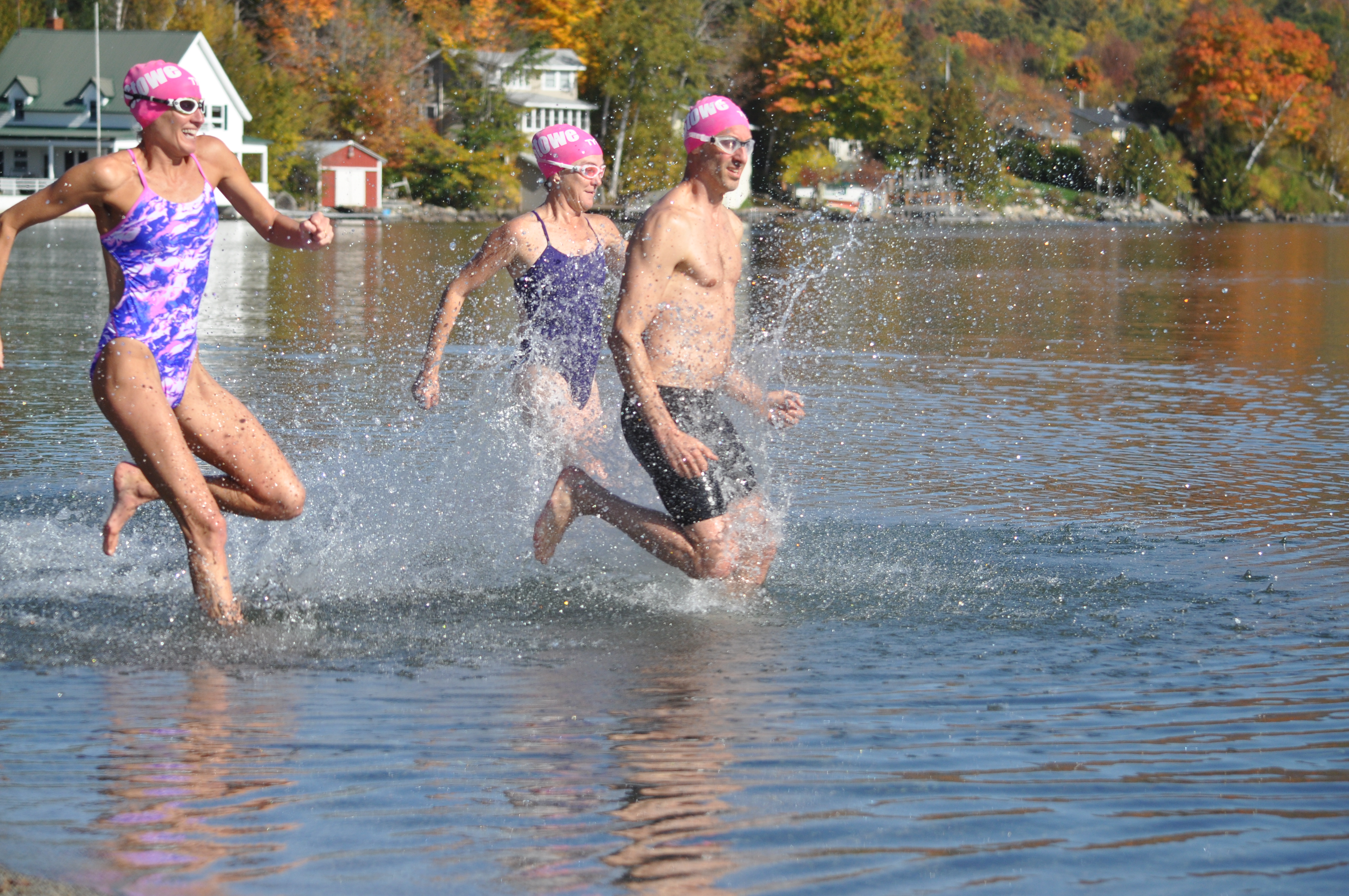
Beach Starts
In-Water Starts
In-water starts are much simpler than beach starts. These require swimmers to tread water behind a start line. Once the start horn goes off, start swimming. These starts provide a better opportunity for you to position yourself near swimmers who are your speed. If you don’t want to be part of the chaos at the start of the race, feel free to stay behind the pack and wait a few moments before going.
Finishes
Finishes can make or break a swim. Going from horizontal swimming to vertical running takes good timing, and all finishes require accurate navigation to finish at the correct spot. Prerace preparation is key, so know where you’re heading ahead of time.
Beach Finish
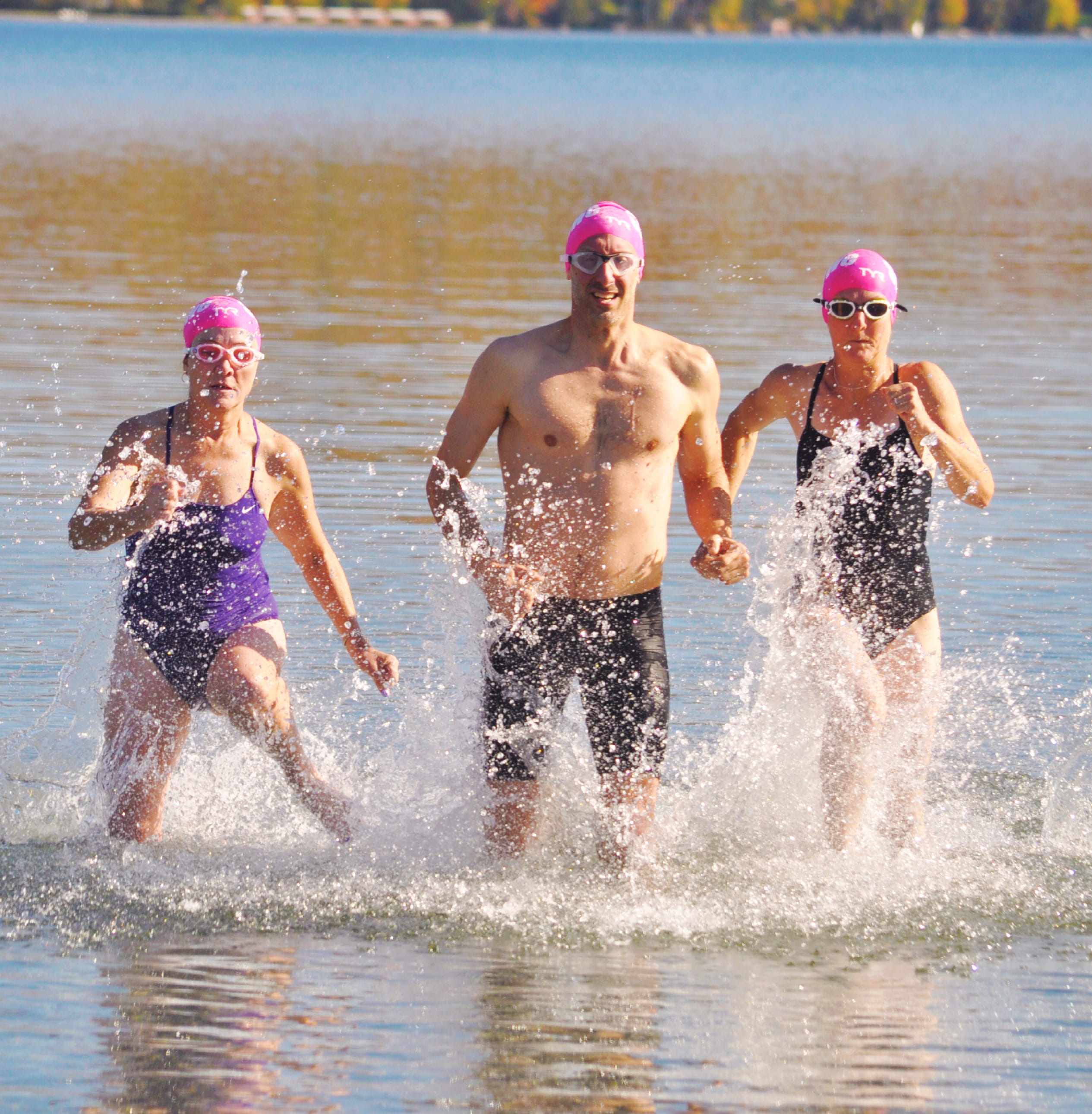
Perform your beach finish in the opposite order of your start. When you get to water shallow enough that your hands start to touch the bottom, begin performing dolphin dives until you get to a spot where the water only comes up to your mid-thigh. From there, run into shore with high knees and your legs recovering to the side. Once you get completely out of the water, give it everything you’ve got left to get to the finish line.
In-Water Finish
For an in-water finish, familiarize yourself with not only the finish line but also landmarks close by to allow you to navigate better. Increase your tempo over the final stretch, and sprint across the finish line and touch the touchpad with a firm finish if your race has one.
